Nature · Paul da Serra
Fanal Forest
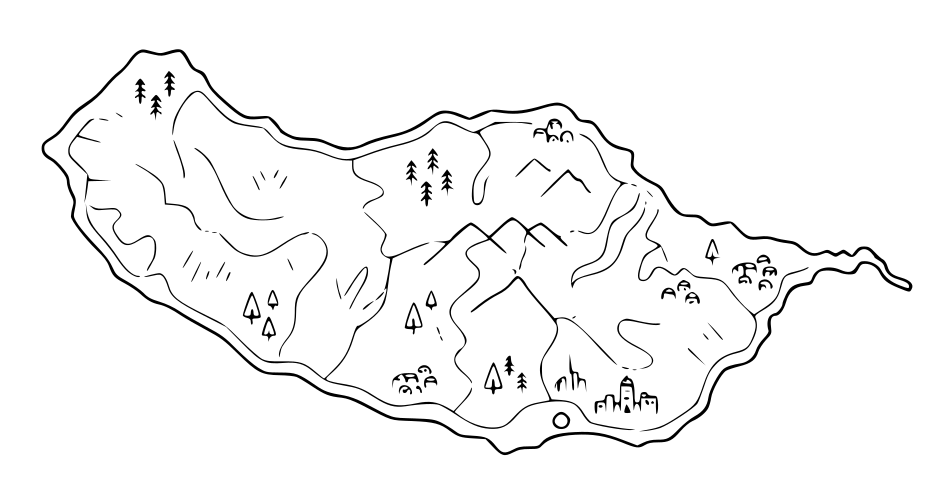
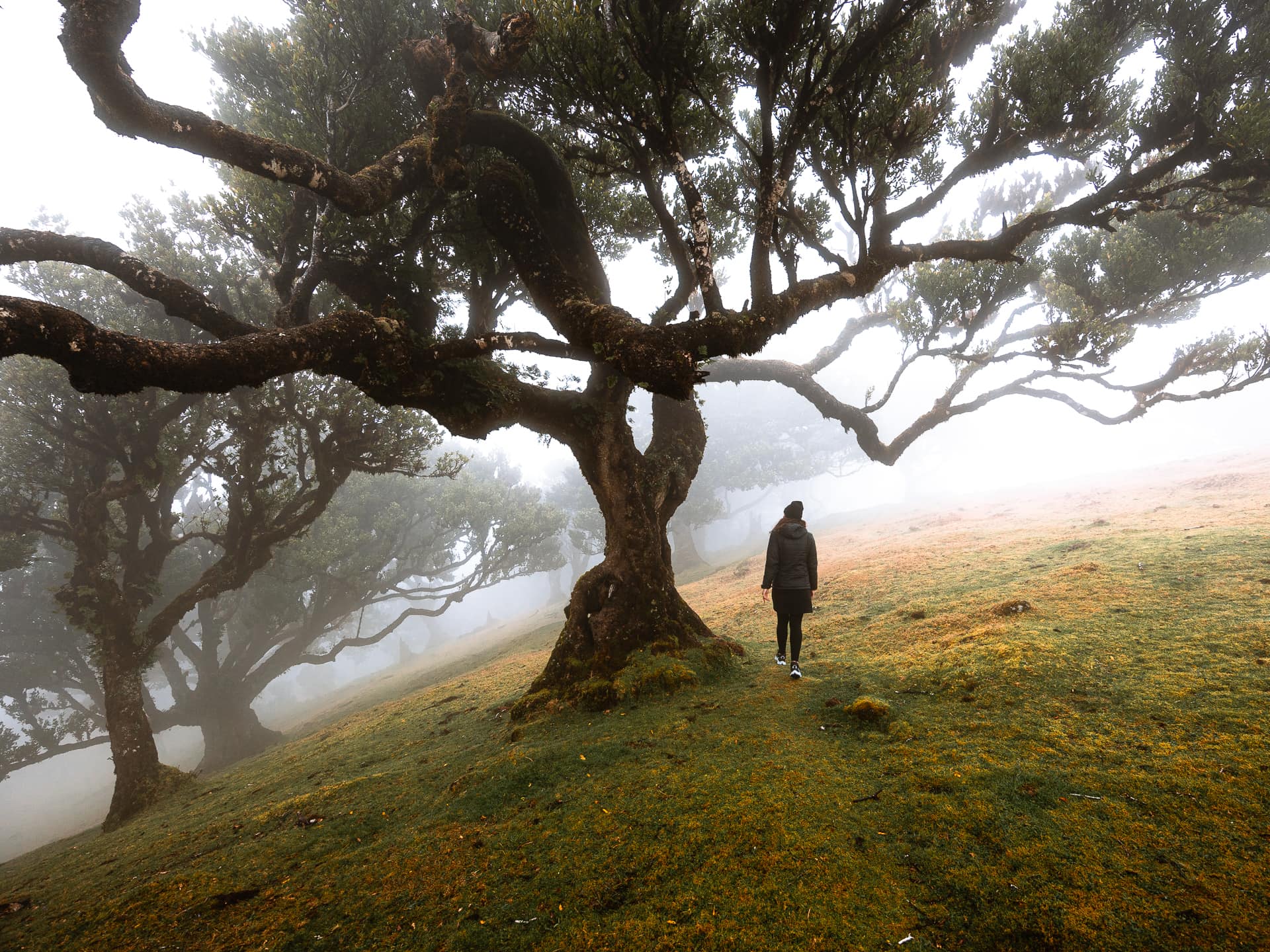
Fanal Forest is one of Madeira’s most distinctive natural places: a high, misty plateau with twisted, ancient laurel trees growing in open grassland. It lies in the north-west of the island, near the Paul da Serra plateau and within the Laurissilva Forest, a UNESCO World Heritage Site. Fog often moves through the trees, giving Fanal its famous quiet and almost prehistoric atmosphere.
History and character
Fanal is not a planted park or an artificial forest. It is a surviving part of Madeira’s native Laurissilva, a humid subtropical laurel forest whose origins date back around 20 million years to the Tertiary period. Before Portuguese settlement in the 15th century, Laurissilva covered much of Madeira. Large areas were later cleared for timber, charcoal, farming and sugar-cane cultivation, but difficult mountain terrain helped some original forest survive. Today Laurissilva covers around 15,000 hectares, roughly 20 percent of Madeira, mainly in the higher and wetter northern areas. UNESCO listed Laurissilva of Madeira as a World Heritage Site in 1999 because it is the largest surviving area of this type of primary laurel forest. Fanal is especially known for its centuries-old Til trees, scientifically called Ocotea foetens. Their low, twisted branches reflect years of exposure to wind, mist and wet soil. Exact ages are not known for each tree, but some trees in the protected Laurissilva are thought to be more than 800 years old, and Fanal’s oldest Til trees pre-date the Portuguese settlement of Madeira.
Why visit
- Part of the Laurissilva Forest, a UNESCO World Heritage Site since 1999
- A relict subtropical laurel forest ecosystem with origins around 20 million years old
- Centuries-old Til trees, Ocotea foetens, with wind-shaped trunks and low twisting branches
- Some old Laurissilva trees may be more than 800 years old; the exact age of individual Fanal trees is not known
- A landscape shaped by frequent fog, high humidity, wind and open mountain pasture
- Laurissilva still covers around 15,000 hectares, about 20 percent of Madeira
- One of the world’s best-preserved remaining examples of laurel forest, a vegetation type now limited mainly to Madeira, the Azores and the Canary Islands
- Easy access to the open forest area, plus nearby walking routes such as PR13 – Vereda do Fanal and PR14 – Levada dos Cedros
Practical tip
Visit when fog is present if you want Fanal’s most atmospheric look, but expect cold wind, wet grass and low visibility. Bring waterproof clothing, warm layers and shoes that can handle mud. Stay on established paths, do not climb or hang from the ancient trees, and avoid drone use or loud behaviour in this protected habitat.