Market · Funchal Old Town
Mercado dos Lavradores
Mercado dos Lavradores is Funchal’s historic farmers’ market, located near Zona Velha and the waterfront. It opened on 24 November 1940 as a purpose-built place for the city’s food supply: local growers, flower sellers, fishmongers and other traders could sell their goods in one central market instead of using scattered streets and squares.
History and character
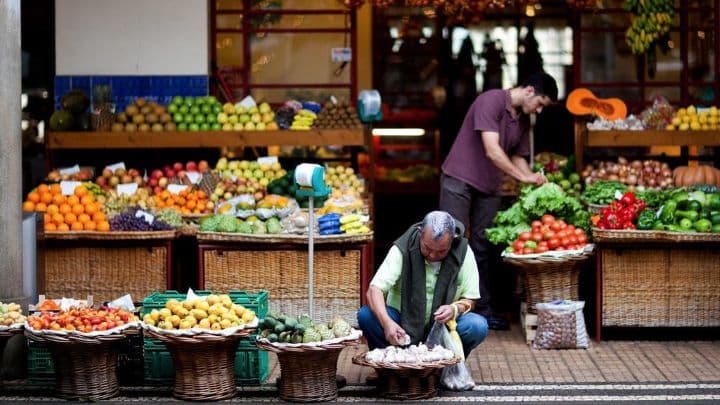
The market was designed in 1938 by Portuguese architect Edmundo Tavares and inaugurated during the municipal administration of Fernão de Ornelas. Its purpose was practical as well as civic: to organise the sale and distribution of fresh food for Funchal. Farmers from across Madeira brought fruit, vegetables, herbs and flowers; fishmongers sold the day’s catch; other traders offered meat, poultry, cheese and regional produce. The building is a notable example of Estado Novo-era architecture. Its façade, main entrance and fish market are decorated with large 1940 azulejo panels made by the Faiança Battistini factory and painted by João Rodrigues with regional scenes. More than eight decades later, Mercado dos Lavradores remains part of daily life in Funchal, although it is also one of the city’s busiest visitor attractions.
Why visit
- Opened on 24 November 1940 as Funchal’s central supply market
- Designed by architect Edmundo Tavares and associated with the municipal period of Fernão de Ornelas
- Large 1940 azulejo panels by João Rodrigues on the façade, main entrance and fish market
- Flower stalls, tropical fruit, vegetables, herbs, regional products, cheese and other local goods
- Fresh fish and seafood section, often including tuna and black scabbardfish, known locally as espada
- Noite do Mercado, the lively night of 23 December, when locals gather in and around the market before Christmas
- A working market and a useful introduction to Madeira’s food, farming and fishing traditions
Practical tip
Visit in the morning when the market is at its liveliest and the fish section is most active. Enjoy the flowers and local produce, but check prices before ordering cut fruit or buying souvenirs: stalls aimed at visitors can be more expensive than ordinary local shops.