Beach · Seixal
Praia do Porto do Seixal
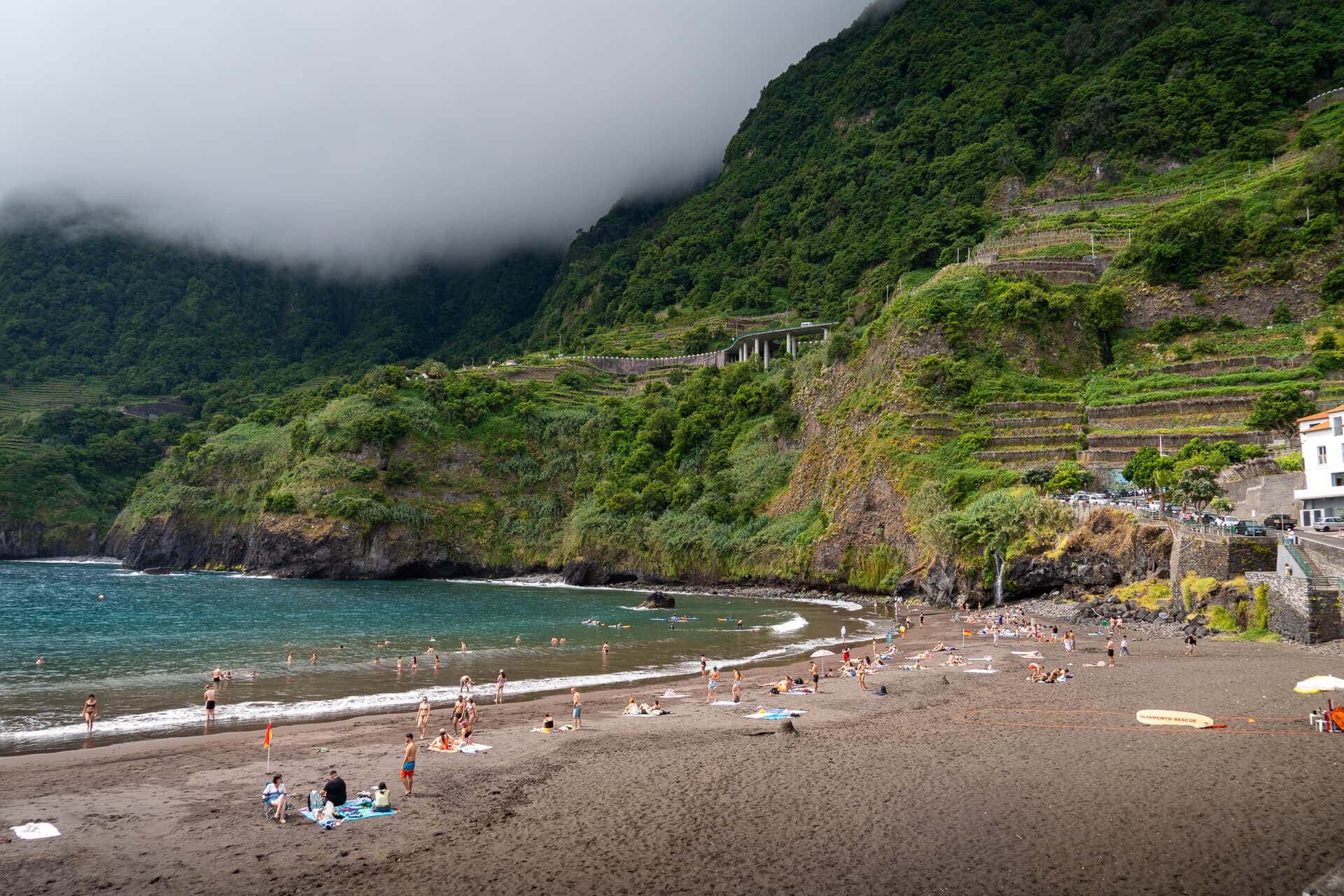
Praia do Porto do Seixal, also known as Seixal Beach or Praia do Cais do Seixal, is one of Madeira’s most striking natural beaches. It sits on the north coast beneath steep green mountains and is known for fine black sand, clear Atlantic water and a small waterfall that often runs down the cliffs behind the beach.
History and character
The black sand at Praia do Porto do Seixal is a direct result of Madeira’s volcanic origin. The island was created by volcanic eruptions over millions of years, leaving basaltic rock along much of the coast. Rain, landslides, waves and ocean currents gradually break basalt into small grains; because basalt is rich in dark minerals, the sand appears black. The beach itself is natural, but the area beside the Port of Seixal has been improved over recent decades with access, a promenade, parking and basic visitor facilities. This improved access, together with the opening of modern north-coast roads and the rise of travel photography and social media in the 2010s and 2020s, made Seixal far more visible to visitors. There is no single official date when the beach “became popular”: it has long been used by local residents, while its wider international popularity grew gradually as the north coast became easier to reach and images of its black sand, waterfalls and green cliffs spread online.
Why visit
- A natural beach of fine black sand formed from eroded basaltic volcanic rock
- One of the most photogenic contrasts on Madeira: dark sand, turquoise water and steep green mountains
- A small waterfall can often be seen on the cliffs behind the beach after rain
- Also known as Seixal Beach and Praia do Cais do Seixal
- Located beside Port of Seixal, with access to the village promenade and nearby natural swimming pools
- The village of Seixal grew around farming, fishing and a small coastal harbour, while the fertile north-coast slopes support vineyards, vegetables and fruit
- The northern location receives more rain than the south coast, which helps create the dense green landscape around the beach
- The beach’s wider popularity grew gradually in the 2010s and 2020s as north-coast access improved and images spread through travel media and social platforms
Practical tip
Visit early in the day, especially in summer, because parking near the beach is limited. The north coast can be cooler and cloudier than Funchal, and the Atlantic can change quickly. Check the sea conditions before swimming, do not enter rough water, and remember that the dark sand becomes very hot in strong sun.