Beach · Caniçal
Prainha do Caniçal
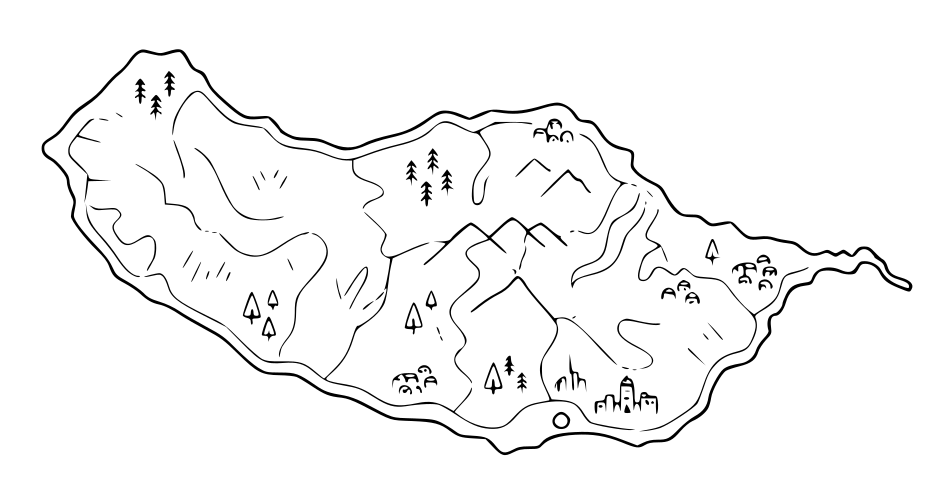
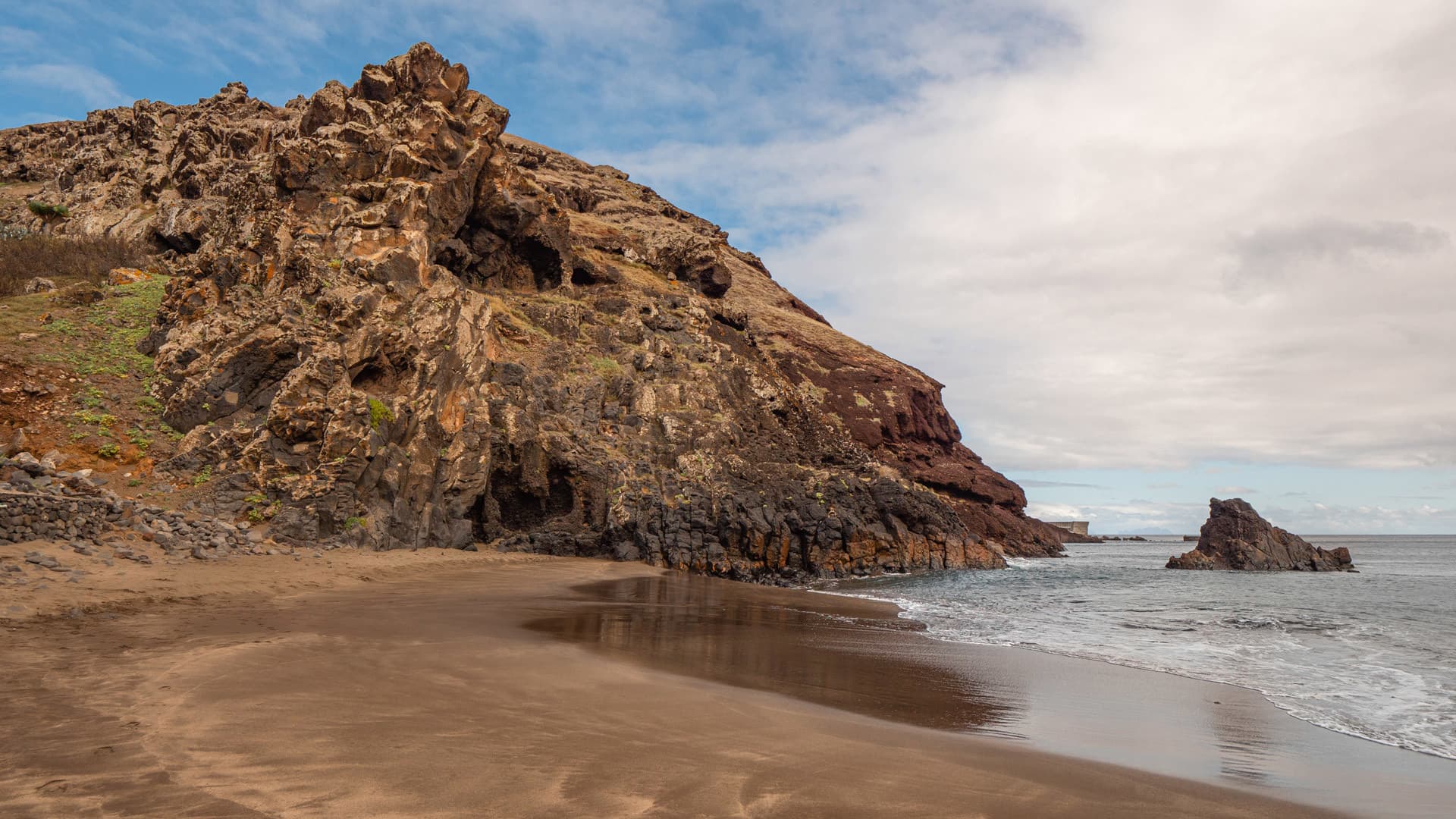
Prainha do Caniçal is a small natural-sand beach on Madeira’s dry east coast, between Caniçal and Ponta de São Lourenço. It is one of the island’s rare permanent natural sandy beaches, standing out from Madeira’s usual pebble and volcanic-rock shores. Its coppery, dark sand, clear Atlantic water and dry yellow-brown cliffs create a landscape that feels very different from the green central mountains.
History and character
Prainha do Caniçal does not have a single construction or opening date because the beach is a natural geological feature, not an artificial beach. Madeira was formed by volcanic activity over millions of years, and erosion by rain, wind and the Atlantic gradually shaped this small sheltered bay. The beach’s dark, copper-coloured sand comes from volcanic material broken down by the sea. Nearby are the Dunas da Piedade, fossil-rich calcareous dunes of recognised geomorphological interest. These formations help explain why this short stretch of coast is scientifically unusual: volcanic material, sedimentary deposits and a dry eastern climate meet in one small area. The beach later received practical visitor facilities, including access steps, parking, changing rooms, showers and seasonal food service, but the bay itself remains a natural beach rather than a built attraction.
Why visit
- One of Madeira’s few permanent natural-sand beaches
- Coppery, dark volcanic sand rather than imported sand or pebbles
- A small sheltered bay on the dry east coast, near Ponta de São Lourenço
- Dunas da Piedade nearby: fossil-rich calcareous dunes with geological interest
- A landscape of yellow, brown and orange cliffs that contrasts with Madeira’s greener areas
- Clear water that can be attractive for swimming and snorkelling when the sea is calm
- Parking above the bay, steps down to the beach, toilets, showers and seasonal food service
- A good stop before or after visiting Ponta de São Lourenço or Caniçal
Practical tip
The beach is small, so arrive early on warm weekends. The path down includes steps, and the shoreline can have waves or a strong current when the Atlantic is rough. Bring sun protection because the eastern landscape has little natural shade, and always check sea conditions before entering the water.